 By Marcus Bell
Editor-in-Chief
Denim Tears Jacket QC: Zippers, Cuffs, and Color
This article solves a specific problem: when you're looking at a denim tears jacket on fashion-reps, how to go from the product detail page to the QC photos for the same item, and record zippers, cuffs, stitching, and color as evidence you can use for a purchase decision. After reading, you should be able to distinguish between clearly visible, suspected abnormal, and cannot determine information, and decide whether to request additional photos, cons
Editor score 4.2 / 5
This article solves a specific problem: when you're looking at a denim tears jacket on fashion-reps, how to go from the product detail page to the QC photos for the same item, and record zippers, cuffs, stitching, and color as evidence you can use for a purchase decision. After reading, you should be able to distinguish between clearly visible, suspected abnormal, and cannot determine information, and decide whether to request additional photos, consult the seller, or hold off on buying. This article does not provide authenticity or quality guarantees, nor does it use product main images, brand pages, or other product photos as QC evidence. 🔎
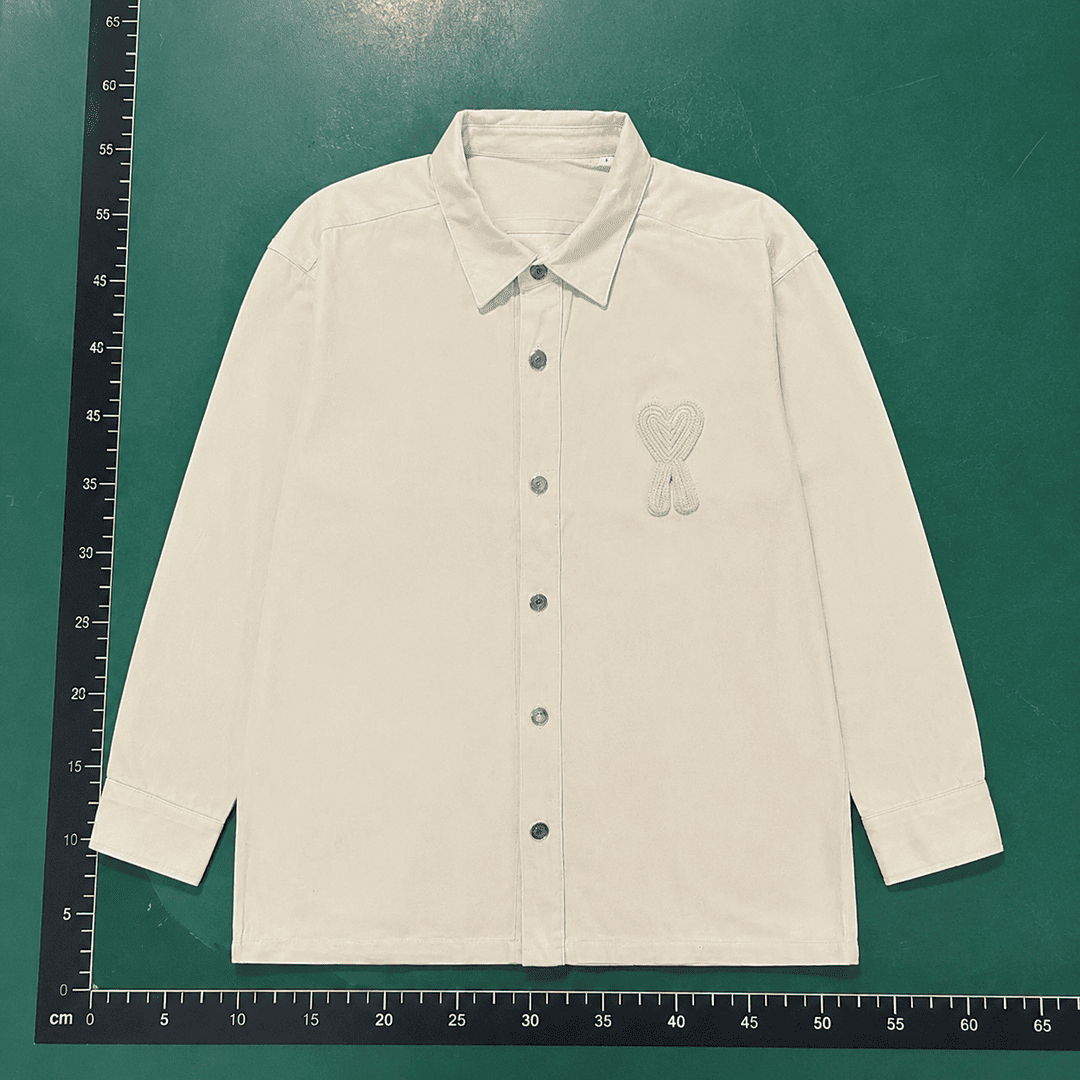
First, I need to clarify the evidence boundary: the specified QC photo record is inconsistent with the item described in the article. The existing source summary shows that the photo record corresponds to an Ami Paris Navy Heart-Logo Tee, not a denim tears jacket that can be confirmed. Therefore, the inspection methods below can be used for a denim tears jacket, but you cannot write any detail from that specified photo as existing physical evidence for the jacket. Before publishing, you should reopen the target product detail page and confirm that the product name, color, size, and the View QC Photos entry all belong to the same item.

Defining the Inspection Scope for denim tears Jacket QC Photos
First, limit the inspection task to four categories of observable information:
- Size and fit: size tag, measurement photos, body length, chest width, sleeve length, and whether the measurement positions are complete.
- Color and pattern: whether the main color is uniform, whether light/dark differences are due to lighting, and whether print or decoration positions match the selection on the product page.
- Structure and hardware: whether zippers, zipper pulls, buttons, cuffs, hem, and seam positions are completely visible.
- Surface and workmanship: whether obvious stains, damage, loose threads, wrinkles, glue separation, or abnormal print edges can be confirmed from the original photos.
The goal of this step is not to find a "looks perfect" conclusion, but to determine whether each judgment is supported by sufficiently clear photos. Photo angles, reflections, compression, and obstructions can all change the observation results. 👀
Recording Style, Color, and Available Sizes from the fashion-reps Product Detail Page
Do not go directly to QC judgment from the homepage, category page, brand page, or search results. You should first open the target product detail page and record the following:
- Whether the product name clearly includes denim tears jacket, not a t-shirt, hoodie, or other style.
- Whether the currently selected color, size, and variant are already chosen.
- What zipper, cuff, hem, print, or seam features are shown on the product page.
- Whether the page shows available sizes, a size chart, or measurement information provided by the seller.
- Whether the product page's main images are only display images and cannot directly replace warehouse actual photos.
The product page record is used to establish a baseline of "what should be compared." It cannot prove that the specific item received in the warehouse already matches the display images, nor can it prove that size, color, or details have not changed before actual shipment.
Clicking View QC Photos to Get QC Original Photos for the Same Item
Find the button named View QC Photos on the product detail page, then enter the QC photo gallery for that item. Do not guess the QC address, and do not use photos of other items as photos of the target item. After entering, first confirm that the page or image context still points to the same item.
It is recommended to save observation records in the following order:
- Record the product name or page identifier.
- Record the selected color and size.
- Look at the full-item photos and confirm that the clothing type in the photos is consistent with the target item.
- Look at detail photos and confirm whether zippers, cuffs, hem, and seam areas belong to the same garment.
- Mark what each photo can prove and cannot prove.
- Request additional photos for unclear areas instead of filling gaps with subjective assumptions.
If the QC photos do not show the size tag, complete measurements, or key details, record it as "cannot determine" rather than defaulting to acceptable. 📷
Checking Zipper, Zipper Pull, and Front Placket Closure Status in Order
First, check whether the zipper is completely present in the photo. What needs to be confirmed is not the brand mark, but whether the structure is observable: whether the zipper teeth are continuous, whether the zipper tape is obviously skewed, whether the zipper pull is securely attached, and whether the two sides of the front placket can roughly align after zipping.
You can record findings in three levels:
- Clearly visible: the photo is clear enough to see the full zipper or key connection positions.
- Suspected abnormal: there is obvious skew, partial detachment, discontinuous zipper teeth, or misalignment after closure, but due to angle or obstruction, additional photos are needed to confirm.
- Cannot determine: the zipper is obscured by fabric, the photo is too dark, parts are missing, or the closed state is not shown.
Do not infer authenticity just because the zipper pull looks similar, and do not write smoothness as a tested result. QC photos at most support limited judgment of appearance and structure, and cannot prove long-term durability. ⚙️
Comparing Visible Stitching at Cuffs, Hem, and Seams
For cuffs, check the opening, edge finishing, and attachment points separately. The key is whether continuous stitching, obvious skipped stitches, loose threads, or unfixed fabric edges are visible. If the cuff is folded, the fold itself does not equal damage; only record it as a visible issue if the photo clearly shows edge, stitching, or tears.
For the hem and seams, compare with the structural description on the product page. Check whether the stitching roughly follows the edge, whether seam lines have obvious breaks, and whether there is visible asymmetry between left and right. Do not judge the overall fit from a single angled photo, and do not write slight wrinkles directly as workmanship defects.
For size judgment, prioritize measurement photos and size tags from the same QC gallery. If there are no measurement photos, you can only say "the existing photos do not provide sufficient size evidence," and you cannot estimate actual size from model photos or hanger photos.
Recording Color Consistency Evidence Separately from Product Page and QC Photos
Color comparison must be recorded separately: the product page describes the seller's displayed option, and the QC photos describe the appearance in the current photos. There may be effects from lighting, white balance, screen display, and shooting angle, so you cannot replace evidence with "looks about the same."
Suggested checks:
- Whether the color name selected on the product page matches the current variant.
- Whether the main color in QC full-item photos is uniform, and whether there are obvious local color differences.
- Whether color differences between different QC photos are affected by lighting changes.
- Whether prints, embroidery, or seam areas have obvious color cast, missing parts, or abnormal positions.
- Whether there is a photo taken in natural light or relatively even lighting for comparison.
If there are only warm or dark indoor photos, record as "color cannot be fully confirmed" and request additional photos under more even lighting. Do not write photo color differences directly as dyeing problems, and do not write color matching as a guarantee. 🎨
Separately Marking Clearly Visible, Suspected Abnormal, and Cannot Determine Content
A useful QC record should make the next action clear at a glance. You can use the following format:
- Clearly visible: front placket zipper, cuff edges, or hem stitching are fully shown in the photo, and the observed appearance can be described.
- Suspected abnormal: there is possible thread breakage, misalignment, color difference, or hardware damage in a certain area, but closer or different angle photos are needed to confirm.
- Cannot determine: key areas are not in frame, are folded and obscured, photos are blurry, or there is no comparison information for the same item.
Do not write "no obvious problems found" as "no problems." The former only means the current photos do not show clear abnormalities, while the latter exceeds what the photos can prove.
Deciding to Request Additional Photos, Consult, or Hold Off Based on Evidence
You can decide based on evidence strength:
- If zippers, cuffs, hem, and color all have clear photos, and the product name, color, and size correspond, then continue to check size, cost, and shipping conditions.
- If there is only one localized suspected abnormality, first request close-up additional photos for that part, and ask if replacement or return is possible.
- If key areas cannot be photographed clearly, or QC photos do not match the product name, color, or size, hold off on buying; do not use photos from other products as substitute evidence.
- If you find obvious damage, severe loose threads, zipper that cannot close, or color that clearly does not match the selected variant, consult the platform or seller about possible after-sales options within the warehouse processing period.
Additional photo requests should be specific to the part and action, such as requesting to show the zipper fully closed, inside and outside of cuffs, hem seam area, and overall color under natural light. Do not include order number, full shipping label, phone number, address, or payment information in the request. 🔐
This article provides a method for organizing photo evidence, not a promise of authenticity, durability, or final quality of a denim tears jacket. The existing specified photo record's item identity is inconsistent with the topic, so you should not make a purchase decision based on that photo until you reconfirm the target item and its QC photo gallery.