 By Marcus Bell
Editor-in-Chief
By Marcus Bell
Editor-in-Chief
Bottega Veneta Shoes: Verify Box Choice & Shipping Fees
This article focuses on a specific package scenario: when a purchase page shows [Bottega Veneta](https://fashion-reps.net/brand/bottega-veneta) style [shoes](https://fashion-reps.net/shoes), and you're preparing to ship from China to a destination country, how to decide whether to keep the shoe box, and how to separately verify the item price, service fees, packaging fees, shipping fees, payment fees, taxes, and exchange rate. The article does not replace the latest regulations of the destinatio
Editor score 4.2 / 5
This article focuses on a specific package scenario: when a purchase page shows Bottega Veneta style shoes, and you're preparing to ship from China to a destination country, how to decide whether to keep the shoe box, and how to separately verify the item price, service fees, packaging fees, shipping fees, payment fees, taxes, and exchange rate. The article does not replace the latest regulations of the destination country's customs or carriers, nor does it treat the product page name as proof of authenticity, brand authorization, or material.

The Specific Choice to Resolve for This Bottega Veneta Shoe Shipment
The actual decision to make is not simply choosing 'with shoe box' or 'without shoe box', but comparing the actual chargeable weight, volume, protection level, and loss risk of the two packaging states under the current shipping route.
After reading this article, you should be able to do the following:
- Fix the same shoe model, same size, same quantity, same destination, and same route conditions.
- Save the product page and the warehouse's weigh, measure, and packaging records for verification.
- Separately inquire about the chargeable weight, packaging method, and quote for keeping the shoe box and removing the shoe box.
- Record the item cost, agent service fee, packaging fee, payment fee, international shipping fee, tax, and exchange rate impact in separate columns.
- Pause submission when key data is missing, rather than assuming 'removing the box is usually cheaper'. 📦
This article does not apply to packages with multiple pairs of shoes mixed, items with batteries or other restricted items, nor to scenarios requiring authenticity verification, brand authorization, leather composition, or destination country import permits.
Fix Product Style, Size, Quantity, Destination, and Packaging State
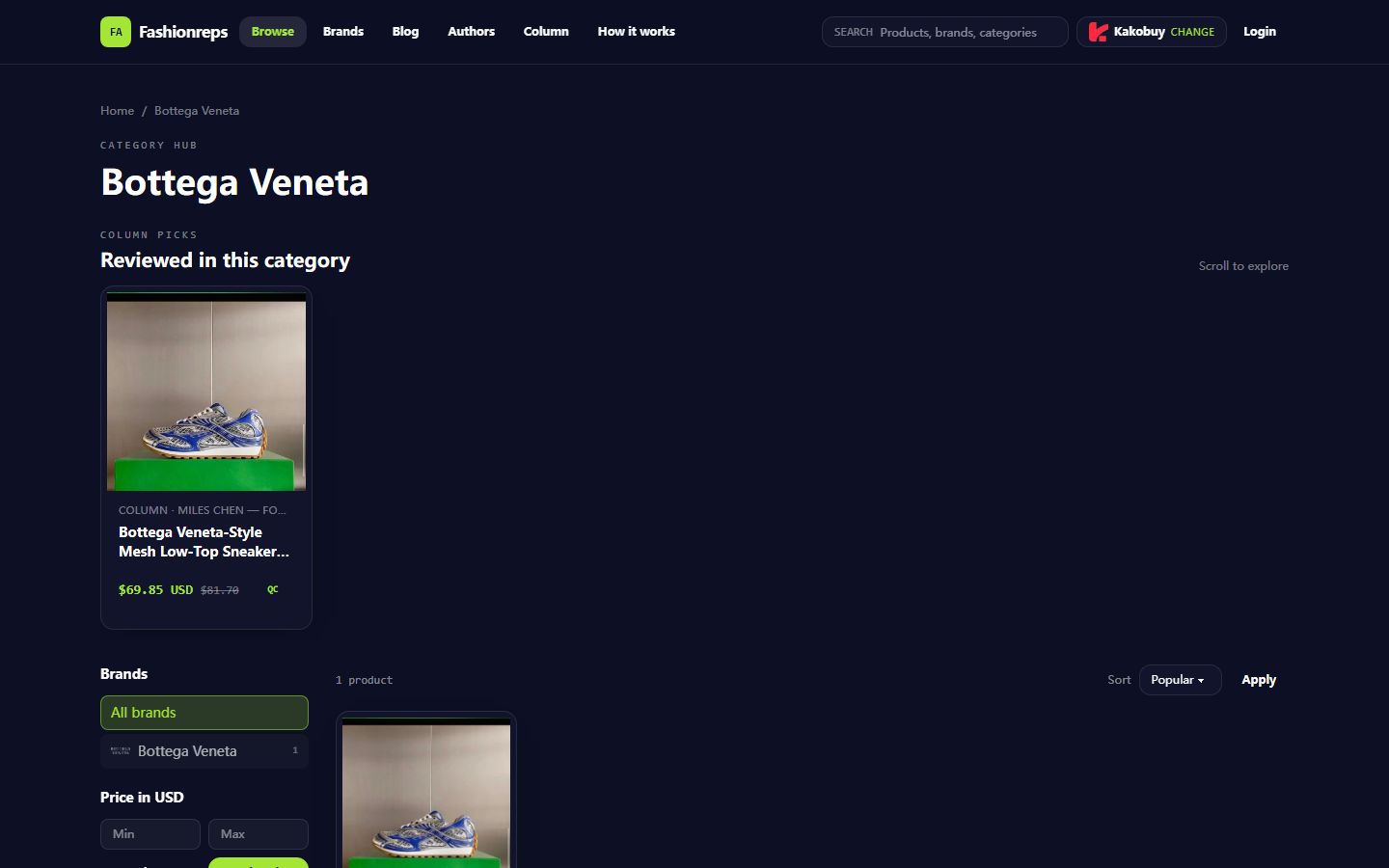
First, fix the variables; otherwise, two quotes cannot be compared. The current reference page shows a Bottega Veneta style mesh low-top sneaker with a USD reference price; the word 'style' in the page name does not prove the product is authentic, nor does it prove that it uses specific brand materials. The product name, reference price, and page status should be re-verified before ordering.
It is recommended to create a package record that includes at least:
- Product page title, page URL, and screenshot save time.
- Selected size, color, quantity, and whether there are different sole or accessory versions.
- Destination country, state or province, postal code, and any special restrictions in the recipient's area.
- Whether to keep the original shoe box, shoe trees, dust bags, replacement laces, and other accessories.
- Whether warehouse photography, size re-check, visual inspection for obvious issues, or repackaging is needed.
- Planned shipping route, service name, and quote currency.
If the destination, quantity, or shoe box status changes, it should be treated as a new quote condition. Do not directly apply the estimate for one pair to two pairs or a combined package.
Which Price, Size, and Packaging Fields on the Product Page Must Be Saved First
The product price is one field in the total cost, not the final landed cost. The product page should at least save the product name, variant, reference price, currency, page time, and visible product description. The reference price shown on the current page can only be used as page display information and cannot be automatically extended to inventory, final transaction price, shoe box dimensions, warehouse weight, or international shipping cost.
After the warehouse receives the product, the following information should be requested:
- Actual weight of one shoe and the whole pair.
- Length, width, height, and total weight when keeping the shoe box.
- After removing the shoe box, what protective materials are used for the upper, sole, and toe.
- Repackaged length, width, height, actual weight, and chargeable weight.
- Whether there are volumetric weight rules, minimum chargeable weight, or rounding rules.
- Whether fees are charged for inspection, photography, reinforcement, box replacement, box removal, or repackaging.
Actual measurements are more important than the product title. Shoe box size cannot be inferred from image proportions, and upper material cannot be judged solely from images. If the page does not provide these fields, they should be listed as pending verification rather than filled in with a seemingly precise value.
What Protection and Volume Conditions to Check for Keeping vs. Removing the Shoe Box
Keeping the shoe box generally provides more stable upper support, toe protection, and paired storage, but may increase the outer packaging size. Removing the shoe box may reduce volume, but cannot be assumed to lower the final shipping cost, because carriers may charge based on actual weight, volumetric weight, or the higher of the two.
| Packaging Option | Protection Conditions to Check | Billing Conditions to Check | Main Risks |
|---|---|---|---|
| Keep shoe box | Is the box intact? Is there support inside the shoe? Is the outer packaging crush-proof and moisture-proof? | Outer packaging dimensions, actual weight, volumetric weight, route minimum chargeable weight | Increased volume may raise chargeable weight or packaging fees |
| Remove shoe box | Are there enough supports for the toe and upper? Is the sole isolated? Is there moisture-proofing? | Repackaged dimensions after box removal, actual weight, chargeable weight | Upper deformation, crushing, or loss of accessories, and may not reduce cost |
| Use smaller packaging | Is the new packaging suitable for the shoe shape? Are necessary accessories kept? | New packaging material fees, handling fees, dimension and weight changes | Insufficient protection or additional handling fees |
You need to write both 'how much shipping cost decreases' and 'what risks increase' into the decision record. Only when both keeping and removing the shoe box receive formal quotes from the same route, same currency, and same time frame can an effective comparison be made. 🧾
If the shoe box itself has collectible, return/exchange, or gifting purposes, removing it is not just a logistics decision. If the shoe box is merely shipping packaging, then you can further compare volumetric weight and protection costs. Regardless of which option you choose, you should require the warehouse to confirm that after removing the box, they will not discard insoles, accessories, tags, or other items that may affect return/exchange processing.
How to Record Route, Chargeable Weight, Quote Currency, and Time in the Official Shipping Calculator
Quotes must be saved with complete conditions, not just a total amount. When using an agent platform or carrier's official calculator, it is recommended to record in the following order:
- Select destination country, region, and postal code, and confirm whether it is a remote area.
- Enter two separate sets of packaging dimensions and weights for keeping and removing the shoe box.
- Record the route name, service level, estimated transit time, and whether basic insurance is included.
- Save the chargeable weight, quote currency, quote time, and validity period displayed by the calculator.
- Record whether fuel surcharges, remote area fees, oversize fees, or other route surcharges are included.
- Link the screenshot or exported record to the package number to avoid mixing quotes for different packages.
If the calculator only shows 'shipping fee' without explaining the chargeable weight or additional fees, mark the result as incomplete verification. Page refresh, exchange rate changes, route adjustments, and warehouse re-measurement can all cause quote changes. Do not write a one-time query result as a fixed promise. ⏱️
How to Separate Service Fees, Packaging Fees, Taxes, and Exchange Rate into Columns Without Mixing into One Number
It is recommended to use a cost table, where each line records only one clearly defined amount. For items where official or warehouse data is not yet available, leave blank or mark as pending verification; do not use estimates disguised as current quotes.
| Cost Item | What to Record | Verification Source | Handling When Unconfirmed |
|---|---|---|---|
| Product price | Selected variant, currency, page time | Product page or order page | Do not treat reference price as final transaction price |
| Service fee | Charging rules for purchasing agent, warehousing, inspection, or handling services | Platform fee page or order details | Confirm whether charged per item, per order, or per package |
| Packaging fee | Fees for box removal, box replacement, reinforcement, moisture-proofing, or repackaging | Warehouse quote or order details | Ask separately for the two packaging states |
| International shipping fee | Route, chargeable weight, quote currency, and time | Official calculator or formal quote | Do not compare without complete conditions |
| Payment fee and exchange rate | Payment channel fees, settlement exchange rate, and amount charged | Payment page or bill | Record nominal amount and actual deduction separately |
| Taxes and customs clearance fees | Destination country taxes, agent customs clearance fees, and possible additional payments | Destination country official information, carrier, or customs notice | Do not state taxes as a fixed percentage |
When converting, keep the original currency and the converted currency. For example, first record the USD shipping fee shown by the calculator, then record the actual amount deducted in your local currency by the payment channel, and note the conversion time. This way you can distinguish exchange rate fluctuations, payment fees, and changes in shipping cost itself.
Do not treat 'tax included', 'duty included', or 'door-to-door' as a guarantee without verification. You must confirm the applicable countries, routes, product categories, declaration requirements, exception handling, and liability boundaries. Import restrictions, taxes, and customs requirements of the destination country should be based on local official information and the carrier's current instructions; do not lower so-called costs through under-declaration, splitting orders to avoid taxes, or evading inspection. 🌍
How to Rewrite as a Verification Process When Shoe Box Dimensions, Route Eligibility, or Current Rates Are Missing
When key evidence is insufficient, the article or purchase decision should be rewritten as a to-do list rather than providing specific amounts. You can proceed in the following order:
- First ask the warehouse for actual dimensions and weights in both states: keeping and removing the shoe box.
- Request details on protective materials used after box removal, handling of accessories, and outer box condition.
- Enter both sets of data in the same official calculator, and save the route, currency, chargeable weight, and query time.
- Confirm service fees, packaging fees, payment fees, and possible re-weighing rules with the platform.
- Check the current requirements of the destination country regarding shoes, brand markings, taxes, and import restrictions.
- If a field cannot be verified, list it as an undetermined cost and pause package submission.
If the formal quotes for the two options differ very little but there are significant differences in upper protection, priority should generally be given to discussing damage risk, return/exchange conditions, and package value, rather than just looking at surface shipping cost. If removing the box still results in the same chargeable weight, removing the box may only reduce packaging volume without bringing expected savings; if removing the box significantly reduces volumetric weight, then additionally confirm whether the packaging is sufficient to withstand long-distance transport.
Action and Stop Checklist Before Submitting the Bottega Veneta Shoe Package
Complete the following checks before submission:
- Product page name, variant, reference price, currency, and verification time saved.
- Confirmed that the word 'style' in the page does not equal authenticity, authorization, or material proof.
- Destination, quantity, size, and route fixed.
- Dimensions, actual weight, and chargeable weight for keeping and removing the shoe box are recorded, or clearly marked as pending verification.
- Both options are compared using official calculator or formal quotes within the same time frame.
- Product price, service fee, packaging fee, payment fee, international shipping fee, tax, and exchange rate are separated into columns.
- Return/exchange window, shoe box requirements, accessory retention, and shipping damage handling conditions confirmed.
- Destination country taxes, import restrictions, and declaration requirements checked.
- Order number, passport, payment card, complete shipping label, or other personal information not publicly disclosed.
Stop submission and re-verify if any of the following occurs:
- Only one total price without explained conditions.
- Shoe box dimensions or packaged weight are guessed, not measured by the warehouse.
- Quote currency, query time, or route name is missing.
- Platform cannot explain the protection method or accessory handling after box removal.
- Expected savings are insufficient to cover potential damage, loss, or return/exchange difficulties.
- Destination country rules, carrier eligibility, or customs liability not confirmed.
The final decision should be written as a reviewable conclusion: which packaging is chosen, under what destination and route, at what chargeable weight quote, how much is saved or added, what additional risks are taken, and which condition changes require re-quoting. Keeping the shoe box may increase volume and packaging costs, but helps protect the shoe shape and accessories; removing the shoe box may reduce volume, but may increase risks of crushing, deformation, or return/exchange difficulties. Without same-condition actual measurement data, it is not recommended to remove the box for an unverified lower price.