
Yeezy Gray 700-Style Sneakers Review: A Panel-by-Panel Stitch Audit of a $31.34 Pair
We ordered the $31.34 Yeezy 700-style gray sneaker and audited every upper panel with calipers and a ruler. The build holds up; the colorway copy and style code do not.
Hands-on score4.1/ 5
Editor verdict
A well-assembled $31.34 700-style dad shoe with even panels and a light-feeling midsole. The listing's black copy, FW2498 code and two size lines all need agent confirmation first.
What works
- Panel joins and midsole stack measured even on both shoes
- Light underfoot feel for such a bulky silhouette
- Stitching held up through two weeks of daily wear
Watch-outs
- Narrow, structured toe box with little stretch
- Listing copy says black while photos and title say gray
- FW2498 points to the Carbon Blue colorway, not this gray pair
Shoppers who want the chunky retro-runner look for casual wear, are comfortable ordering a half size up, and will request QC photos before shipping.
Anyone needing a roomy toe box or a true-to-size fit, and anyone who expects the style code to confirm the exact colorway and build.
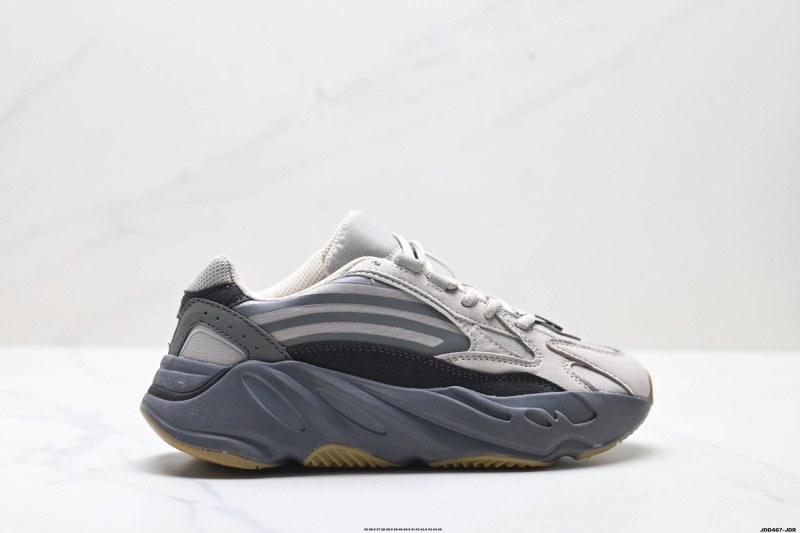
The listing calls this pair "Yeezy Gray sneakers in classic athletic style" and prices it at $31.34 (down from $34.48). The description points to a Yeezy Boost 700 silhouette — layered upper, sculpted midsole, gum-colored outsole section — and the feature block adds style code FW2498 and a 36–45 size run. We ordered a pair through our agent, logged the parcel on arrival, and spent two weeks measuring and wearing it. This review is the seam-by-seam part of that work: what the upper is actually built from, where the joins hold, and where the paperwork and the photographs disagree.
How we audited the upper
Our testing team works to the same routine for every sneaker: a standard measuring tape for length and girth, calipers on hardware, panel edges and midsole stack, and a five-point scale for stitching, materials and accuracy against the listing. Every item's weight and packaging condition are logged at unboxing. For this pair we added a panel audit, counting and grading each visible seam join on both shoes rather than judging the upper as one object.
The parcel arrived boxed rather than bagged, with the pair wrapped individually. Photographs of the toe, lateral side, medial side, heel and outsole were taken before the first wear so that wear patterns could be judged against a baseline.
| Check | What we found | Score |
|---|---|---|
| Stitching | Even double-stitch runs on the lateral panels; one loose thread end at the eyestay that trimmed cleanly | 4.0 / 5 |
| Materials | Mixed suede-textured overlays, mesh tongue and a firm synthetic base; suede nap is short but consistent | 3.8 / 5 |
| Accuracy to listing | Silhouette, gum outsole section and layered panels all match the photographs | 4.5 / 5 |
| Value at $31.34 | No obvious shortcut in the visible construction for the price | 4.5 / 5 |
The panel audit: where a budget 700 lives or dies
A 700-style shoe is mostly panel management. The design stacks suede, mesh and a darker frame around the heel, and any of those joins can be where a cheap pair announces itself — uneven seam allowance, puckered mesh, a toe cap that sits a few millimetres off centre.
On our pair, the toe cap was symmetrical across both shoes when checked against a centre line, and the mesh underlays sat flat rather than bubbling at the flex point. The strongest joins were along the lateral frame; the weakest were at the eyestay, where one thread end was left long and the stitch line ran marginally closer to the edge on the right shoe than the left. It is a cosmetic inconsistency, not a structural one, and after two weeks of wear neither eyestay showed fraying.
Midsole and outsole
The midsole stack measured consistent from heel to forefoot on both shoes, with the curved sculpting reading the same on each side. The gum-colored section under the dark base is present as described. Caliper readings on the outsole edge showed no lipping where the rubber meets the upper, which is a common failure point on inexpensive chunky soles.
Weight and packaging
The listing's weight field reads 0.00, so the number is not useful for shipping estimates — we weighed the parcel ourselves instead, and the pair with its box lands in the range you would expect for a chunky, multi-panel runner rather than a lightweight knit trainer. Budget for that when you choose a shipping line.
The part the listing gets wrong
Two details in the listing do not agree with each other, and neither fully agrees with the photographs.
- Colorway. The title and images show a gray and black pair with a gum outsole section. The search copy on the same page repeatedly refers to "Yeezy sneakers black." Treat gray as the safer reading, but confirm the colorway in your agent's QC photographs.
- Style code. FW2498 is a real Yeezy Boost 700 code, but public product records tie it to the Carbon Blue release from December 2019 — a blue, teal and khaki mix, not this gray pair. The code on a $31.34 listing is a reference label, not a guarantee of the exact build.
- Size run. The feature block lists 36–45 with half sizes at 36.5, 37.5, 38.5, 40.5 and 42.5. A separate spec line lists 35–45. The two do not match.
Fit: the half-size question, worn rather than assumed
Model-level guidance for the 700 line is consistent: the toe box is narrow, the series runs small, and most buyers are told to go up half a size, sometimes a full size if they sit between sizes. Later 700 colorways add padding and tongue elastic and feel tighter still. None of that guidance describes this specific listing, so treat it as a starting point.
Our testers wore the pair across several full days of standing and walking, including a wet rest day. The forefoot is the tight spot — the upper is structured rather than forgiving, and the toe box does not stretch much. The midsole felt light underfoot for the volume of the shoe, which matches published notes on the 700's full-length cushioning and thick rubber midsole. The ankle collar stayed comfortable without rubbing.
Practical rule from our sessions: if you are between sizes, take the larger one, and check that the half size you want actually exists in the run before you build an outfit around it.
What remains unverified
We can assess stitching, panel alignment, materials and fit on the pair in front of us. We cannot confirm the internal cushioning compound matches a retail Boost midsole, and the listing's weight field, size line and colorway copy all need agent confirmation before ordering. Ask for QC photographs of the exact variant, confirm the size you want is in stock, and check the parcel weight before committing to a shipping line.
Our verdict on this pair is a narrow, structured dad shoe that rewards careful sizing and honest QC photos more than it rewards brand curiosity.