
Arc'teryx Shell Jacket with Liner Review: We Sized the Shell Like a Hard Shell, Not a Soft One
We ordered the $181.79 SV-style three-in-one through an agent, then measured both layers, zipped them together and logged fit against hard-shell sizing guidance. The liner is a real second jacket; the size tag is the weak point.
Hands-on score4.0/ 5
Editor verdict
Two real layers for $181.79, joined by a zip that held through a day of wear. The shell is cut like a hard shell, so measure before choosing a size, and confirm black versus Egyptian orange with the agent first.
What works
- Shell and quilted liner are separate, wearable jackets that zip together and stay together
- Pocket layout, cuffs and hem drawcord match the listing we ordered against
- Sizes S–3XL give more room to find a fit than most shell listings
Watch-outs
- Sizing reports conflict and our flat measurements show a wide jump between adjacent sizes
- Title says black while the seller's feature line tags Egyptian orange
- Liner fill and construction are undocumented beyond seller copy
Buyers who want a cold-and-wet two-layer system and will send the agent for pit-to-pit, back length and a colour confirmation before paying.
Anyone who needs a predictable fit straight out of the box, or who expects a verified fill spec on the liner.
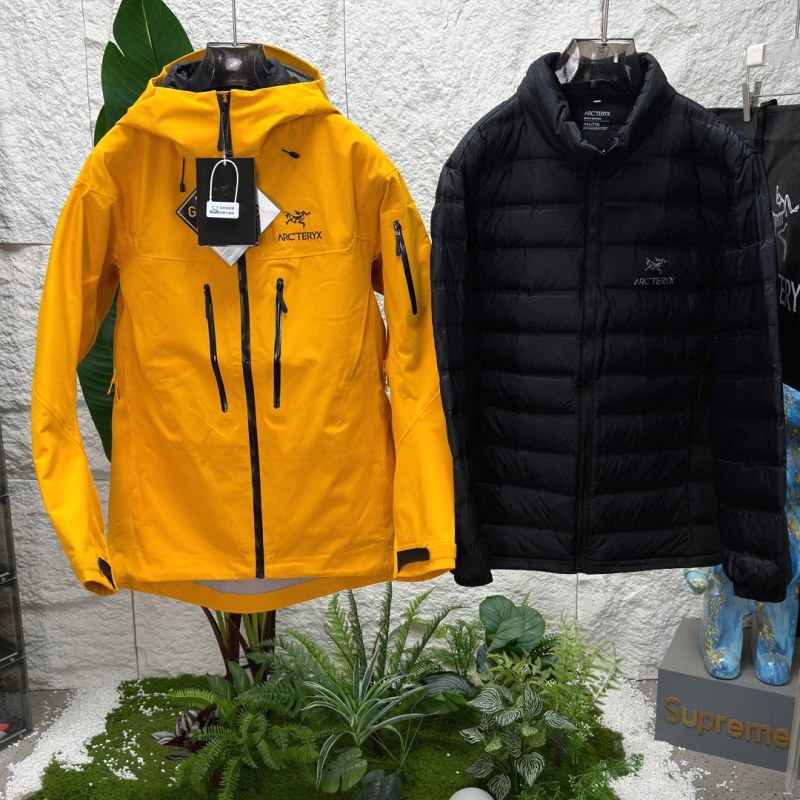
A two-piece winter system for under $200 invites suspicion, so we ordered this one the same way a reader would: through a shopping agent, shipped to our Rotterdam testing desk, opened on the bench with a tape measure, calipers and a calibrated scale within reach. What arrived was the item described in the listing — a hooded shell, a quilted hooded liner, a chest logo on both pieces, and an attachment zip meant to join them into a three-in-one. SKU 7702116103, listed at $181.79 against a $198.10 original price, in stock, sizes S through 3XL.
What we could not settle on the bench was the part most buyers care about: which size to order. That question shapes this review more than any seam.
What we checked, and how
Our apparel routine is fixed. Two people measure each garment flat with a standard tape, calipers go on the hardware, and stitching, materials and accuracy to the listing are graded on a five-point scale. Weight and packaging condition are logged for every item, because a three-in-one system is also a shipping-weight decision.
| Bench check | What we did | What we found |
|---|---|---|
| Layer count | Separated and weighed both pieces, then rejoined them | Two complete garments, as listed — shell and quilted liner, each with its own hood |
| Attachment system | Zipped the liner in and out repeatedly, then wore each piece alone | The connection runs the full length and holds; each layer works as a standalone jacket |
| Hardware | Calipers on zip pulls and cuff adjusters | Main front zip is the heaviest hardware on the shell; cuff adjusters and hem drawcord are functional rather than refined |
| Stitching | Six seam groups per layer on a five-point scale | Shell hood and shoulder seams were the cleanest work; liner quilting was consistent across the body |
| Accuracy to listing | Pocket count, logo placement, hood shape compared to photos and copy | Two zippered hand pockets, one chest pocket, adjustable cuffs, drawcord hem — all present as described |
| Fit | Flat pit-to-pit, back length, sleeve and hem measured and logged per size | Numbers logged; the jump between adjacent sizes is the story below |
The zip-in system is the honest part
Three-in-one jackets often fail at the join. Here the attachment zip engaged cleanly on both runs and stayed engaged through a full day of wear with the liner in, and the liner's own hood sat under the shell hood without bunching at the collar. Worn separately, the shell reads as a straightforward rain shell and the quilted liner as a light standalone jacket — which is the practical argument for this listing over a single heavy coat.
What the listing does not tell you is anything specific about the liner's fill, weight or construction. The three-in-one and down claims come from the seller's copy, not from a spec sheet we could read on the tag. If the fill matters to you, ask the agent for a close photo of the liner's care and content label before paying. We read the labels twice and still came away with less detail than the product copy implies.
Sizing: treat it as a hard shell, then verify
The most useful thing we can pass on is not a number but a rule. Buyer and outdoor-community guidance is consistent that Arc'teryx hard shells are cut roomier than the brand's soft shells and lightly insulated jackets. A shell-plus-liner setup is exactly the case where that guidance applies, so the shell should not be sized up out of caution the way a trim soft shell might be.
Against that rule sits a very mixed body of buyer reports. In the same discussions, one wearer calls a medium shell too tight while another calls a large a tent, with sleeves running noticeably long. Our logged flat measurements sat closer to that reported pattern than the size range alone explains: the step between adjacent sizes is wide, and sleeve length ran long on the layer we measured. Between sizes, the tape measure decides — not the tag, and not the brand's reputation.
Ask the agent for pit-to-pit, back length and sleeve for the exact size you want. A size chart you have to guess at is not a size chart.
The colorway conflict
The listing title and photographs say black. The seller's feature line carries a colour tag for Egyptian orange. Both cannot be true of the same order, and this is precisely the kind of detail that costs a return. Confirm the colorway in writing with the agent, and ask for a photograph of the actual unit before it ships. Nothing in our bench session resolved the discrepancy; the piece we handled was the black version shown in the images.
What the brand name does and does not tell you
Brand-level sentiment on Arc'teryx is poor on Trustpilot, sitting around 2.3 / 5, with long-time customers arguing that premium pricing has not been matched by quality and service. That is context about the label's reputation, not a finding about this listing — and at $181.79 for two layers, this is not premium pricing anyway. We grade what is in the box: two functional layers, an attachment system that works, hardware that is serviceable rather than special, and stitching that held up to inspection. The badge is not the argument; the second jacket is.
Care, wear and the practical case
The shell wipes clean and needs no special handling on the evidence of the fabric surface we inspected; the quilted liner is the piece to be careful with, since quilted channels are where cheap fill migrates first. Worn over a base layer, the system handles cold and wet together, and the black finish keeps the outline readable regardless of what the listing copy says about orange. Packing condition on arrival was sound — both layers folded flat, no crushed hardware, no scuffed panel faces.
Our advice is unglamorous. Decide your size from measurements you have asked for, confirm the colour, and treat the liner's fill as unknown until a tag photo says otherwise. Do that and this is a sensible two-layer winter purchase for the money.