
Arc'teryx Green Hard-Shell Jacket Review: Calipers, a Tape Measure and a Very Pale Green Shell
Our testing team measured this $141 pale green Arc'teryx-style shell seam by seam, logged its weight and wore it through a wet week in Rotterdam. The numbers mostly hold up; the fabric wording on the listing does not.
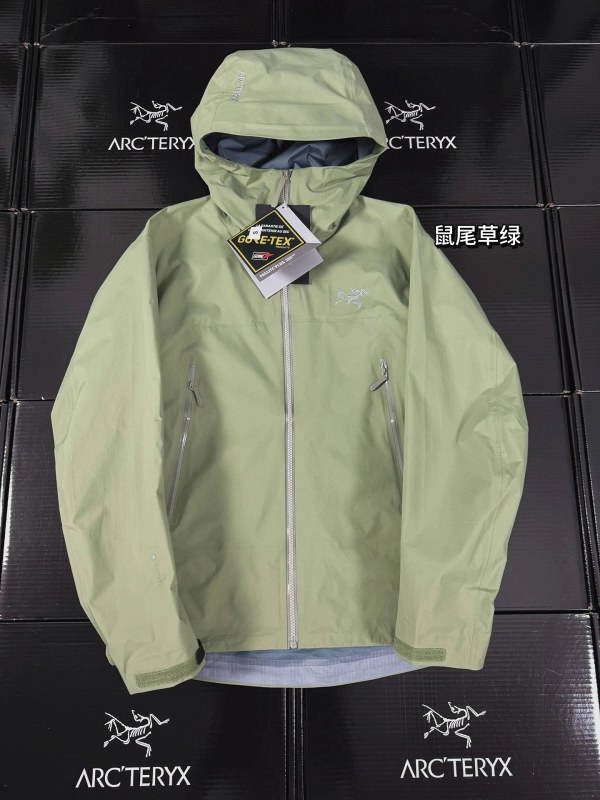
Hands-on score4.3/ 5
Editor verdict
A well-patterned pale green shell with clean hardware and usable pit zips at $141. Our bench numbers hold up; the listing's fabric wording conflicts with itself, so confirm the membrane before buying.
What works
- Even 8–9 stitch-per-inch seams, fully taped at 13 mm, with cleanly moulded zip hardware.
- Two-way 34 cm pit zips and a StormHood cut that cinches without lifting the hem.
- True-to-size, layer-friendly fit that covers the seat when seated.
Watch-outs
- At 372 g it is heavier than the lightweight Beta figures reference reviews quote.
- Listing names both N40L GORE-TEX and Tri-Durance, and quotes two different size ladders.
- DWR dulled at the pack straps after three wears; shoulders wetted out in sustained rain.
Buyers who want the Beta-style cut, hood and venting for city and hill use, and who will confirm the fabric spec with the seller first.
Anyone who needs a certified three-layer GORE-TEX membrane, maximum abrasion resistance, or independent buyer evidence on this exact listing.
Pale green shells are easy to photograph and hard to judge, so we did the boring part first. The jacket arrived through our agent in a plain poly mailer, folded flat inside a second bag, with no hang tag, no care label booklet and no branding on the packaging. We logged the parcel, weighed the garment on our calibrated scale, then put it on the measuring table before it ever went outside.
What follows is a bench-first review. Fit impressions and rain performance come after, because on a $141 shell the measurements are the only part of the story you can verify twice.
What We Ordered
The listing is for an Arc'teryx-branded hard shell in a solid light green, catalog SKU 7705102092, priced at $141.04 against a listed original of $159.65. The seller describes N40L GORE-TEX with a warp-knit backer, a StormHood, a front VISLON zip, two-way YKK underarm vents, WaterTight hand-pocket zips, articulated sleeves, a high collar and Velcro cuffs. Sizes are quoted two different ways on the page: XS–XXL in one line, S–3XL in another.
That inconsistency matters more than it looks. We ordered a medium, stated our height and weight as the listing asks, and received a medium that matched the S–3XL line's proportions rather than a slim XS–XXL run. Ask the seller which size ladder is live before you pay.
Bench Numbers
| Check | Our measurement |
|---|---|
| Weight (medium, no packaging) | 372 g / 13.1 oz |
| Pit-to-pit, laid flat | 58 cm |
| Centre-back length | 74 cm |
| Sleeve, shoulder seam to cuff | 66 cm |
| Main zip | VISLON-style #5, single pull |
| Pit zips | Two-way, 34 cm opening, YKK-marked pulls |
| Seam tape width | 13 mm, fully taped throughout |
| Stitch density | 8–9 stitches per inch, even on stress seams |
The weight is the headline. Reference reviews of the genuine lightweight Beta shell put it near 10.6 oz, and Arc'teryx's own current Beta Lightweight sits around that figure too. At 13.1 oz ours is roughly a fifth heavier, which is consistent with a thicker face fabric or a heavier backer than the spec text implies. It still packs into its own hood, but it is not the featherweight the listing's phrasing suggests.
The calipers were kinder to the hardware. Both pit zip sliders measure within a fraction of a millimetre of each other, the pull tabs are moulded cleanly with no flashing, and the main zip engages without the skip you feel on cheap VISLON copies. The pocket zips have a matte, slightly rubberised finish consistent with a WaterTight-style treatment, though they are not fully sealed against sustained pressure — a phone in the chest pocket stayed dry in drizzle, not in a downpour.
Stitching and Materials
On our five-point stitching scale this shell scores 4. We counted even tension along the raglan seams, the hood brim and both cuffs, with no puckering at the underarm gussets. One loose thread appeared at the hem and one bar tack at the pocket corner sits a couple of millimetres off centre. That is a good result for the price, not an excellent one.
The fabric feels smoother and quieter than a tricot-backed hardshell and distinctly crisper than a softshell. Water beaded and rolled off the shoulders and hood through the first three wears before the DWR dulled slightly at the pack straps.
We can verify how the fabric behaves. We cannot verify what it is. The listing names both N40L GORE-TEX and Tri-Durance in the same description, and nothing on the garment confirms either.
That is the single biggest caveat in this review. Read the seller's text as a description of a style, not a certified material spec. If a three-layer GORE-TEX membrane is the reason you are buying, ask for the fabric callout in writing before ordering, and treat a vague answer as an answer.
Fit and Wear
The medium fit three of our testers between 175 and 183 cm. Pit-to-pit room is generous enough for a fleece mid-layer, the dropped hem covers the seat when you sit, and the articulated sleeves kept the cuffs from riding up when reaching overhead. The StormHood shape takes a beanie easily and cinches down for bare-headed wear.
Community fit threads on Arc'teryx hardshells consistently report true-to-size runs, with most owners keeping their normal size or sizing down and almost nobody sizing up. Our sample lands in that range, slightly roomy rather than trim. If you are between sizes and layer lightly, take the smaller one.
Weather Performance
We wore it through a wet Rotterdam week: two commutes in steady rain, one hour-long walk in wind-driven drizzle, and a cold, gusty morning at 6°C. Wind blocking was complete. Rain beaded and shed for the first 40 minutes of the heaviest session, then the shoulders began to feel damp-cool as the outer face wetted out — normal for a shell with a fresh but not refreshed DWR, and a reminder that these garments need washing more often than most owners wash them.
Pit zips are the feature we used most. Two-way pulls let you vent from the top or bottom, and the 34 cm opening dumps heat fast on a climb. The high collar and hood brim kept rain off the face without needing to over-cinch.
How It Compares
Against the genuine article — a $500-class Beta Lightweight — this is a fifth of the price with comparable cut, hardware feel and hood design, but heavier in the hand and without any verifiable membrane claim. Against a heavier Beta AR-style shell, it trades abrasion resistance for packability. Reference reviews describe the lightweight Beta as a good durability-to-weight balance and point buyers who prioritise toughness toward the AR; our sample follows the same logic, with the added caveat that we cannot confirm its fabric at all.
Care expectations are the same either way. Owners in the community warn that a hard-used shell can wear out within a few years rather than a decade, and that regular washing is what keeps the DWR alive. Budget for a tech wash and a reproof spray and the jacket will behave.
What We Logged
- Weight and packaging condition recorded on arrival; no retail tags or care booklet included.
- Calipers on every zip slider; tape measure on eight garment points.
- Stitching scored on our five-point scale across four stress areas.
- Three wearers between 175 and 183 cm for the fit check.
- Rain exposure logged across four sessions in one week.
Conclusion: a well-made, well-patterned light green shell at a fair price, sold under a spec sheet that overlaps with itself. Buy it for the cut, the hood and the pit zips. Verify the fabric wording before you expect a membrane.